
Suprascapular Nerve Entrapment
This is a painful diseased condition of the shoulder in which there is traction damage to the suprascapular nerve leading to pain in the shoulder. Suprascapular neuropathy, resulting in shoulder pain and weakness, is frequently misdiagnosed.
Suprascapular Nerve Entrapment
This is a painful diseased condition of the shoulder in which there is traction damage to the suprascapular nerve leading to pain in the shoulder. Though it is not very common, it can be caused due to excessive nerve deviation like when performing activities that are sporty in nature which involve frequent overhead positioning of the arms.
Suprascapular neuropathy, resulting in shoulder pain and weakness, is frequently misdiagnosed. The consequences of misdiagnosis can include inappropriate physical rehabilitation or surgical procedures. Diagnosing the exact cause of the pain is all the more important.
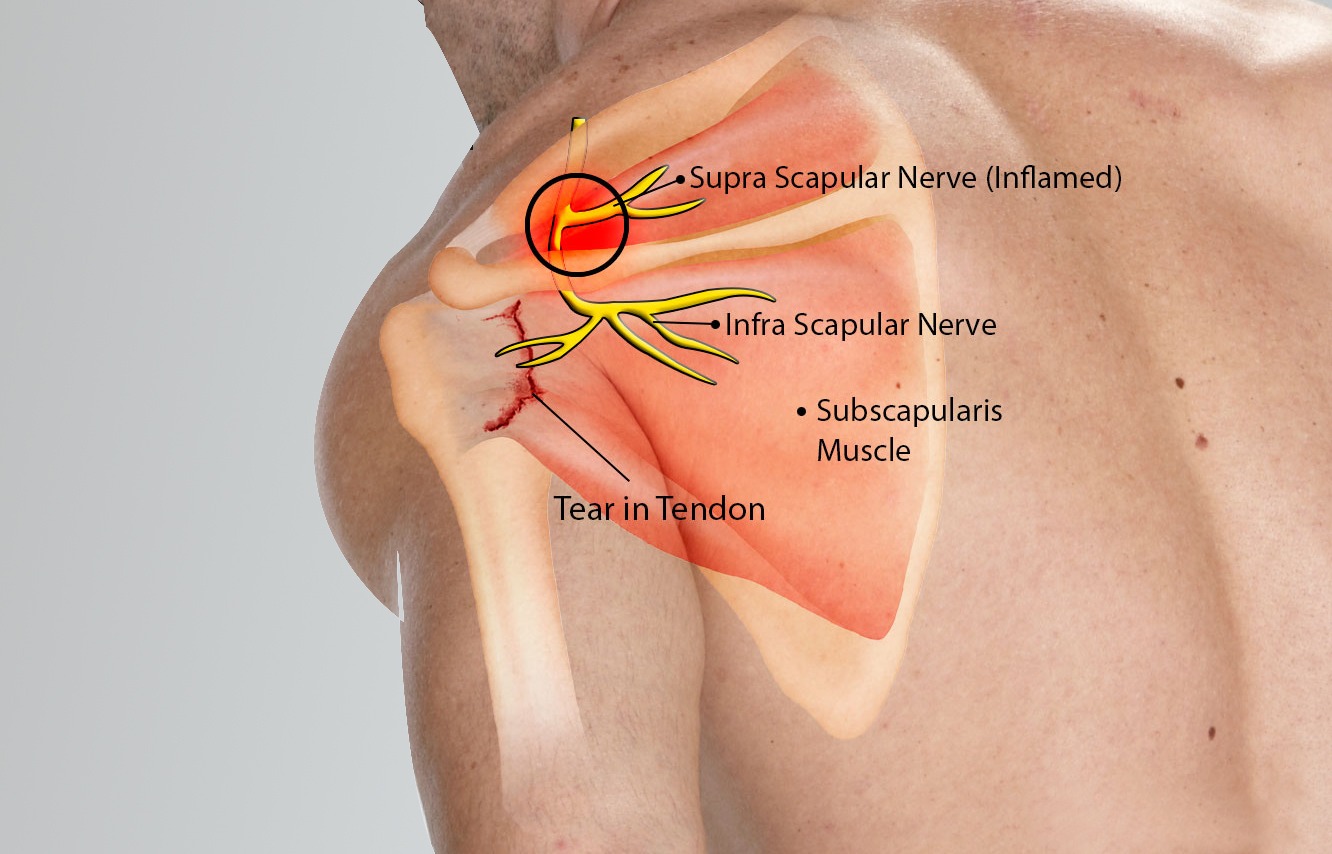
There can be a number of reasons for the nerve entrapment especially at the suprascapular and spinoglenoid notches where nerve deviation is limited by bony and ligamentous structures. Additional compression may result due to ganglion cysts related to glenohumeral joint. In elderly people, suprascapular neuropathy occurs as a result of large rotator cuff tear.
Sports like tennis where frequent overhead positioning of the arm is required may cause suprascapular neuropathy. The exact location of the nerve entrapment determines whether supraspinatus as well as infraspinatus muscles are involved or just the infraspinatus muscle is involved. It cannot be said that sporting activities alone is the main cause of suprascapular neuropathy, direct trauma to the arm such as when falling on to the arm or other overuse type activities may also result in suprascapular neuropathy. Some surgical procedures of the shoulders may also damage the suprascapular nerve like a Bankart Repair where there is a high probability of suprascapular nerve injury. There are instances of suprascapular neuropathy in people who have undergone spinal surgery as a result of their positioning.
Symptoms
Burning and aching pain on the back and side of the shoulders are the primary symptoms of suprascapular neuropathy. The onset of the pain can be either spontaneous or gradual and will be deep set in the shoulders. The pain also radiates to the arms. Weakness of the shoulders when lifting things is another symptom experienced by people affected with this condition. As time goes by, wasting of the supraspinatus and infraspinatus muscles can also be noticed.
Diagnosis
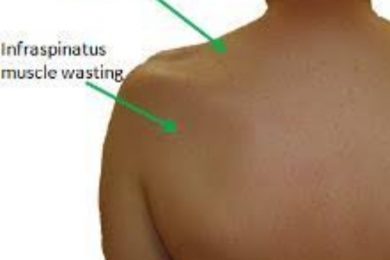 Patient presentation with supra scapular nerve palsy
Significant nerve muscle atrophy/wasting
If suprascapular neuropathy is suspected, the first line of action is to get a radiological study to have a detailed look at the structures. Along with standard views, the suprascapular notch and Stryker views are also taken. Unless there is a trauma to account for this condition, radiographic findings are usually unremarkable. Apart from x-rays, MRI of the shoulder may also be required to see if there is muscle edema along with muscle atrophy. An MRI may also throw light on the presence of a ganglion cyst with resultant compression of the suprascapular nerve.
Another important tool to diagnose suprascapular neuropathy is 3T magnetic resonance, as it identifies nerve abnormalities or denervation changes in the muscles. Being an affordable option, ultrasound is also an important diagnostic tool in identifying suprascapular neuropathy. Ultrasound also has the capability to give precise information.
Apart from the above-mentioned tests, electrodiagnostic study is also very helpful in assessing suprascapular neuropathy. EMG may reveal positive sharp waves and fibrillation potentials suggestive of denervation. There may also be motor unit recruitment abnormalities observed during the study.
Treatment
There are mainly three ways through which scapular neuropathy can be treated viz. conservative measures, surgical procedures and nerve blocks for which studies have shown to be quite beneficial.
Conservative measures:
In cases where suprascapular neuropathy does not give rise to pain or limitation of activity then physical therapy exercises in the form of scapular stabilization and mobilization is enough for relieving symptoms if any and resolving the condition. Treatment may take about a month to finish. This exercise programme is planned in such a way to stem further progression of the disease condition. Impingement of the rotator cuff can also be prevented through this exercise regimen. Physical therapy is recommended when a person is showing the tell-tale signs of scapular neuropathy. Exercise programme is designed to improve flexibility and stability of the shoulders. It should also be noted that in addition to an exercise programme, modification of activities also becomes imperative by way of limiting the amount of work they do, especially during the acute phase of the disease.
Surgical measures:
If conservative measures fail to give the desired result, then the next line of treatment is surgical approach to treat the condition. Surgical procedure is designed in such a way to free up the space for the nerve by widening of the suprascapular or the supraglenoid notch depending on where the nerve is getting compressed.
Arthroscopic surgery:
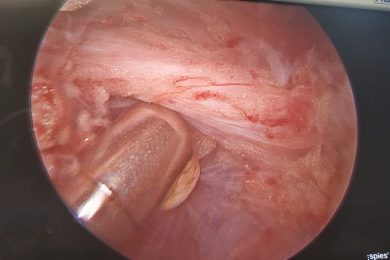 Arthroscopic picture of Supra Scapular Nerve release
The instrument is probing the nerve
Arthroscopic approach (keyhole) is a more accurate method of approached suprascapular nerve entrapment. Arthroscopic release of the entrapped scapular nerve can be performed safely and effectively. Being a minimally invasive procedure, this surgery is gaining a lot of ground of late. It is done by inserting an endoscope (a flexible tube with a light and camera attached to it) into the joint through a small incision. As there is direct vision of the medial neck of the glenoid, complications during the surgery can be reduced to a minimum. Post surgery most of the patients have reported marked improvement in pain relief and function.
Nerve blocks:
In addition to conservative and surgical approaches, nerve blocks can also be used to treat suprascapular neuropathy. These blocks provide significant relief of symptoms by anesthetizing (numbing) the suprascapular nerve with an injection, relieving the shoulder pain arising out of this condition.
For enquiries and online appointments, send message to www.BangaloreShoulderInstitute.com/contact
Q and As – Suprascapular Nerve Entrapment
1. What are the symptoms of suprascapular nerve entrapment?
There are many conditions around the shoulder that can present with the same symptoms, and therefore need to be excluded for proper diagnosis. The possible signs and symptoms include:
- Deep and poorly localized shoulder pain.
- Insidious onset of pain with no shoulder trauma.
- Pain, when the shoulder is slightly moved
- Inability to perform basic functions requiring the shoulder
- Shoulder weakness or pain in particular arm, anterior chest, and neck.
- Muscle wasting and weakness in shoulder muscles, like supraspinatus and infraspinatus.
2. What are the causes of suprascapular nerve entrapment?
Suprascapular nerve entrapment syndrome (SNES) is caused by compression of the suprascapular nerve as it passes through the suprascapular notch. It is an often overlooked injury of the shoulder.
The most common causes of compression of the suprascapular nerve at the suprascapular notch include the prolonged wearing of heavy backpacks and direct blows to the nerve such as those that can occur in football injuries, and in falls from trampolines. It is also seen in baseball pitchers and quarterbacks, basically any sport that requires repetitive overhead shoulder movements. A history of blunt trauma to the back of the shoulder, previous shoulder surgery, or repetitive overhead activity are other possible causes of SNES.
3. How is suprascapular nerve entrapment treated?
There are various treatment protocols to treat suprascapular nerve entrapment. There are surgical and non-surgical treatment options. As a rule of thumb, patients who present with an overuse type of injury tend to fail with surgery whereas patients who have a definitive compression due to structure tend to show positive results following decompression surgery.
Non-surgical treatment is suggested as the preferred course of action in those with an overuse-type etiology. A conservative rehabilitation protocol includes:
- Providing rest to the shoulder from activities that aggravate.
- Soft tissue work on tight and constricted muscles.
- Cervical spine mobilizations at the cervical level.
- Strengthening of the residual fibres of particular muscles in a variety of positions to train them. This helps re-establish a satisfactory muscle balance and function, minimizing the risk of progressive shoulder dysfunction.
- Injection of a corticosteroid into an entrapment at the suprascapular or spinoglenoid notch.
Surgical decompression of the suprascapular nerve is indicated if conservative treatment fails or if a structural and reversible cause of nerve entrapment is suspected in the suprascapular and spinoglenoid notch.
4. How is suprascapular nerve entrapment tested for?
There are a few physical and imaging tests done to diagnose suprascapular nerve entrapment. These include:
- A nerve test called the suprascapular nerve stretch test is done. The purpose of this test is to provoke pain at the back of the shoulder by compressing the suprascapular notch against the nerve. If pain is reproduced then this is considered a positive test.
- The ‘cross-body adduction test’ is also used.
- MRI of the shoulder.
- Electromyography (EMG) combined with nerve conduction velocity (NCV) studies are the gold standard diagnostic techniques.
5. What happens if suprascapular nerve entrapment is left untreated?
If a suprascapular nerve entrapment injury is left untreated, it causes weakness and atrophy of the supraspinatus and infraspinatus muscles of the shoulder.
6. Can suprascapular nerve entrapment cause symptoms beyond the shoulder?
Yes, and this often confuses patients. While the primary discomfort sits deep in the back or top of the shoulder, some people notice pain spreading toward the neck or upper arm. It happens because the nerve shares pathways with other sensory nerves. It does not usually travel below the elbow, so if you feel tingling in your hand or fingers, we consider other causes, such as cervical spine issues. A careful clinical assessment helps separate these patterns and prevents misdiagnosis.
7. Is there a specific test that confirms suprascapular nerve entrapment?
There is no single test that works in isolation. Diagnosis is usually a combination of clinical examination, imaging, and nerve studies. An electromyography test assesses how well the nerve is functioning, while MRI scans help identify structural causes such as cysts or muscle wasting. In some cases, a diagnostic injection around the nerve is used. If your pain improves after the injection, it strongly supports the diagnosis. This layered approach ensures accuracy.
8. Can gym workouts make this condition worse?
Yes, particularly certain types of exercises. Movements that involve heavy pulling, overhead lifting, or repetitive shoulder rotation can aggravate the nerve. Exercises such as lat pulldowns, upright rows, and heavy shoulder presses are common culprits when performed with poor form or excessive load. That said, complete rest is not the answer. The focus should shift to controlled strengthening, correct technique, and gradual progression under guidance. A tailored programme is far more effective than stopping activity altogether.
9. How important is early treatment in this condition?
Timing plays a crucial role. When a nerve remains compressed for a prolonged period, it can lead to muscle wasting and reduced strength that may not fully recover. Early intervention improves the chances of reversing these changes. In the first few months, conservative care such as physiotherapy and activity modification is often very effective. Delayed treatment, especially beyond a year, increases the risk of permanent muscle changes.
10. Can this condition affect my ability to work?
It can, depending on the nature of your job. Individuals with desk-based roles may struggle with prolonged sitting and poor posture, which can worsen symptoms. Those involved in manual labour or repetitive overhead work may find lifting and sustained shoulder use difficult. The good news is that most patients can continue working with minor adjustments. Simple measures such as ergonomic changes, scheduled breaks, and modified duties can make a significant difference during recovery.
11. Can suprascapular nerve entrapment recur after treatment?
Recurrence is possible, although not common, if the underlying cause is addressed properly. For example, if a cyst causes compression and is treated along with the associated labral tear, the chances of recurrence are low. However, if contributing factors such as poor posture or repetitive strain are not corrected, symptoms can return. Long-term success depends on both treatment and prevention strategies working together.
12. Does age influence recovery from nerve entrapment?
Yes, age can influence healing, but it is not the only factor. Younger patients tend to recover faster due to better tissue healing and muscle adaptability. However, older adults can still achieve excellent outcomes with the right treatment plan. The key difference is that recovery may take slightly longer, and there may be other shoulder conditions present, such as degenerative changes. A personalised approach ensures the best possible result regardless of age.
13. When should I seek specialist care rather than continuing self-management?
You should consider specialist assessment if symptoms persist beyond six to eight weeks despite rest and basic exercises. Other warning signs include visible muscle wasting, increasing weakness, or pain that disrupts sleep regularly. Early evaluation allows for targeted investigations and prevents long-term complications. Many patients wait too long, assuming it is a simple strain, which delays recovery.
14. Why does my shoulder feel unstable even after it has “healed” from a dislocation?
This is a very common concern. After a dislocation, the immediate pain settles, and many patients assume the joint has returned to normal. However, a Bankart lesion involves damage to the labrum, which acts as a stabilising rim for the shoulder socket. If that structure has not healed properly, the joint may still feel loose or unreliable.
Patients often describe a sense that the shoulder might “slip” during certain movements, especially when the arm is raised or rotated outward. This is not simply a weakness. It reflects a loss of structural support inside the joint. In such cases, strengthening alone may not be enough, and further assessment is needed to decide whether stabilisation is required.
15. Can I continue exercising if I have a Bankart lesion but no severe pain?
It depends on the type of activity and how stable your shoulder feels. Some patients can continue light, controlled exercises without discomfort. However, movements that place the shoulder in vulnerable positions, particularly overhead or behind the body, can increase the risk of repeat dislocation.
The absence of pain does not always mean the shoulder is stable. That is an important distinction. I usually advise modifying workouts rather than stopping completely. Focus on controlled strengthening of the shoulder blade muscles and avoid positions that provoke a sense of slipping or apprehension. A guided programme is far safer than self-directed training in this situation.
16. How do I know if I need surgery or if rehabilitation will be enough?
This decision is based on several factors rather than a single finding. We look at your age, activity level, number of dislocations, and what imaging shows about the labrum and bone. For example, a young, active individual with repeated instability episodes is more likely to benefit from surgical repair.
On the other hand, if this were a first-time dislocation and your shoulder feels stable with rehabilitation, non-surgical care may be appropriate. What matters most is how your shoulder behaves during daily use; if it continues to feel unreliable despite proper physiotherapy, that usually indicates the need for a more definitive solution.