
Shoulder Tendinopathy
Tendinopathy refers to injury to the tendon. It can lead to pain and swelling and movement can become very difficult.
It is the tendons that connect muscle to bone and often connect near a joint. Tendinopathy refers to injury to the tendon. It can lead to pain and swelling and movement can become very difficult. Tendinopathy may be:
Tendonitis — inflammation of the tendon (not very common)
Tendinosis — tiny tears in the tendon with no significant inflammation (more common)
Shoulder consists of many tendons. They are connected to muscles of rotator cuff and biceps muscle of the arm. If you have tendinopathy, it means your tendons are inflamed, irritated or torn.
Over use of the muscle and tendon is the main reason for tendinopathy. Constant strain on the tendons causes the structure of the tendon to change. The condition can set in over a period of time. It can be the result of involving in activities that require lifting your arm over your head, sleeping on your shoulder every night, repeated throwing or keeping your shoulder in one position for a while.
It should be noted that shoulder tendinopathy can also occur on account of injury to the tendon from:
- Inflammatory disease in the shoulder, such as arthritis
- Trauma to the shoulder such as a fall on outstretched arms
- Normal wear and tear associated with age
Shoulder tendinopathy is generally seen in people who are 30 years and older. It is also common among athletes who have to use their arm extensively in overhead position and throwing motion such as:
- Tennis or other racquet sports
- Swimming
- Baseball
- Bowlers (cricket)
- Overhead assembly work, butchering or using an overhead pressing machine
Symptoms of shoulder tendinopathy:
Symptoms of the condition tend to get worse over time. In the beginning, symptoms may be relieved with rest, but later the symptoms can present constantly. Pain (dull ache) may not always be present but slowly increases as you strain the shoulder. If the symptoms go past the elbow,it usually indicates another problem.
Common signs of the condition include:
- pain and swelling in the front of your shoulder and side of your arm
- pain triggered by raising or lowering your arm
- a clicking sound when raising your arm
- stiffness
- pain that causes you to wake from sleep
- a loss of mobility and strength in the affected arm
- Pain when trying to reach for a back zipper or pocket
- Shoulder stiffness with some loss of motion
Diagnosis of shoulder tendinopathy:
Doctor will ask about your symptoms and medical history followed by a physical exam. Tender areas of your shoulder will be thoroughly examined. You will be asked to move your shoulder in certain directions to test your range of motion. Strength of your shoulder will also be checked by asking you to press against the doctor’s hands. As pinched nerve and arthritis bring about almost the same symptoms, they may check your neck. Bursitis often has the same symptoms. Your doctor may inject a medication that numbs pain. If the pain goes away, it may suggest bursitis, not tendinopathy.
To confirm the diagnosis your doctor may order some imaging tests. An x-ray may be ordered in order to rule out a bone spur. An ultrasound and an MRI may also be ordered to check if there is inflammation in your rotator cuff and signs of any tearing.
Treatment:
It may take several weeks or months to fully heal. Treatments include:
Rest – Though it does not call for full rest, a break from activities that cause pain is warranted. A phased return to normal activities will decrease the chance of damaging the tendon again. Applying cold packs to your shoulder three to four times per day may also be helpful.
Medication – Medications may help to manage the condition, mainly nonsteroidal anti-inflammatory drugs (NSAIDs). Topical pain medications can also be applied to the skin to relieve pain. However, if the pain is severe, steroid medications may be needed. These medications are injected directly to the area. Frequent use of steroid medications can damage the tendons, so it is done with due caution.
Surgery – If conservative treatment modalities do not bring about the required change, your doctor may recommend surgery. The type of surgery will depend on the specific injuries.Most people experience full recovery after having the surgery.
Rehabilitation:
Proper rehabilitation measures help regain strength and range of motion in the shoulder. It may also keep further injuries at bay. Rehabilitation may include:
- Physical therapy to strengthen muscles that control the shoulder
- Exercises to maintain normal range of motion
- Exercises for specific muscles that are used in sports or job activities
- Gradual return to sports and work
- Learning how to adjust activities to prevent re-injury
Tips to prevent shoulder tendinopathy:
- Do regular resistance exercises to strengthen the muscles.
- Use proper athletic training methods.
- Do not increase exercise duration or intensity more than 10% per week.
- Avoid overusing your arm in an overhead position.
- Alter job duties to avoid overhead activity.
- Do not ignore or try to work through shoulder pain.
- Adopt good posture while sitting
- Taking breaks from repetitive activities
- Avoid carrying a bag on only one shoulder
- Avoid sleeping on the same side every night
For questions related to Shoulder Tendinopathy and its treatment options, send a message to www.BangaloreShoulderInstitute.com/contact
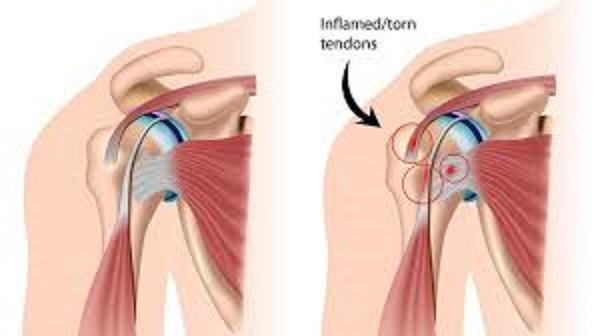
Q & A on Shoulder Tendinopathy
1. What is shoulder tendinopathy?
Shoulder tendinopathy is an injury caused to the shoulder tendons. This can result in pain and swelling and therefore difficulty in moving the shoulders. It can be in the form of inflammation of the tendons or tears in the tendon without inflammation. The tendons in the shoulder are attached to the rotator cuff muscles enabling movement. When this is affected, movement is restricted. This injury may be chronic or acute and is mainly because of overuse of the shoulder.
2.What are the causes of shoulder tendinopathy?
The main reason for tendinopathy is the repeated use of the shoulder. The rotator cuff is the place where tendon injury happens. This is because it is the place that facilitates circular motion in your arm. This condition can be primarily seen in sports like baseball and volleyball players. Tendinopathy can also be due to arthritis, trauma to the shoulder like a fall on outstretched arms, use of hands overhead repeatedly like people using overhead pressing machines, and normal wear and tear associated with age.
3.What are the symptoms of shoulder tendinopathy?
The following are some of the common signs of tendinopathy.
- Pain in the front part of the shoulder
- Pain reaching to the back of the shoulder
- Pain at night when sleeping on the injured side.
- Shoulder stiffness and weakness
- Loss of range of motion
- Clicking sound while raising the arm
- Pain while lifting the shoulder above the head
- Pain while using the arm
4.What are the types of tendinopathy in the shoulder?
There are two types of tendinopathy of the shoulder. They are:
Tendonitis: When there is an overuse and inflammation of the tendons, tendonitis occurs. The pain in this case is immediate and acute. This condition can be easily treated and the damage caused is also not permanent.
Tendinosis: This condition happens when there is degeneration of the tendons and tears begin to appear. This is due to chronic overuse or sudden force leading to an overload of tendons. This injury is more severe than tendonitis. The inflammation begins as tendonitis and slowly develops into tendinosis when untreated.
5.What are the treatment methods for shoulder tendinopathy?
One of the main ways is to stop the root cause leading to tendinopathy. The healing time will be more if the activities causing inflammation are continued. There are both surgical and non-surgical treatments for shoulder tendinopathy.
a. Non-surgical treatment
To begin with, doctors start with non-surgical methods to reduce pain and inflammation.
- Rest is the first thing advised to reduce pain
- Apply ice packs for 20 minutes at a time, many times a day to reduce swelling
- Apply heat to reduce stiffness
- NSAIDs or non-steroidal anti-inflammatory drugs to reduce pain and swelling
- Steroidal injections like cortisone to reduce pain
- Physical therapy that involves stretching exercises to restore range of motion
b.Surgical treatment
The doctor performs arthroscopic surgery if non-surgical methods fail to provide relief. Here, the surgeon inserts a camera called the arthroscope into the shoulder joint and performs the surgery.
6. Is shoulder tendinopathy the same as a rotator cuff tear?
No. Shoulder tendinopathy means one or more shoulder tendons have become painful, overloaded or less healthy over time. A rotator cuff tear means the tendon fibres have actually split or pulled away to some degree.
Many patients worry when a scan mentions tendon changes, but these findings do not always mean there is a serious tear or that surgery is needed. Tendons naturally change with age and activity. What matters most is how your shoulder behaves in daily life, including your pain level, strength, movement and ability to sleep or work comfortably.
An orthopaedic shoulder specialist will match the scan with your examination, rather than treating the report alone.
7. When should I see a specialist for shoulder tendinopathy?
You should arrange an assessment if shoulder pain is not improving after a few weeks of sensible care, especially if it affects sleep, dressing, work, driving or exercise. It is also important to seek advice sooner if the pain starts after a fall, you cannot lift the arm properly, or the shoulder feels suddenly weak.
Not every shoulder pain comes from the tendon itself. Neck problems, nerve irritation, frozen shoulders and arthritis can sometimes feel similar. A careful clinical examination helps confirm the cause and prevents you from spending months doing the wrong exercises.
8. Can shoulder tendinopathy get better without surgery?
Yes, most patients improve without an operation. The main aim is to reduce irritation around the tendon, restore comfortable movement and then rebuild strength gradually.
Treatment may include activity changes, physiotherapy, posture correction, pain relief when appropriate, and a shoulder strengthening plan. Rest alone is rarely enough because the tendon usually needs controlled loading to become more tolerant again.
Surgery is usually considered only when non-surgical treatment has not worked, or when there is a significant tear, ongoing weakness or another structural problem inside the shoulder.
9. How long does it take for shoulder tendinopathy to settle?
Recovery depends on how long the tendon has been irritated, how severe the symptoms are, and how well the shoulder responds to rehabilitation. Some people feel better within several weeks, while longer-standing cases may need a few months of consistent treatment.
Progress is not always measured by pain alone. Better sleep, easier dressing, improved reaching and more confidence using the arm are all good signs. It is common for symptoms to fluctuate during recovery, particularly if you suddenly increase lifting, gym work or overhead activity.
Moving back to heavy lifting, sport or overhead work too soon can set recovery back, so activity should be increased gradually.
10. Why is shoulder tendinopathy often worse at night?
Night pain is very common with shoulder tendon problems. Lying on the affected side can compress the sore tendon, while lying flat may place the arm in a position that increases tension around the shoulder.
Many patients describe a deep ache that becomes more noticeable once they stop moving and try to sleep. Supporting the arm with a pillow can help. If you sleep on the opposite side, place a pillow in front of your chest and rest the painful arm on it. If you sleep on your back, a pillow under the elbow may reduce pulling on the tendon.
Persistent night pain, especially with weakness or loss of movement, should be assessed.
11. Can I still go to the gym with shoulder tendinopathy?
In many cases, yes, but your training needs to be adjusted. The aim is to keep the body moving while avoiding shoulder movements that keep irritating the sore tendon.
Heavy overhead presses, dips, upright rows, throwing movements and fast shoulder exercises often make symptoms worse. Instead, you may need lighter resistance, slower movements and exercises below shoulder height at first.
A useful rule is that mild discomfort during exercise may be acceptable, but pain that increases later in the day or the next morning usually means the tendon was overloaded. A physiotherapist can help you return to pressing, lifting or sport safely.
12. Do steroid injections cure shoulder tendinopathy?
Steroid injections can reduce pain in selected cases, but they do not make the tendon stronger. They are sometimes helpful when pain is stopping sleep or preventing effective physiotherapy.
The best results usually come when an injection is used as part of a wider treatment plan, not as a stand-alone fix. Once pain settles, the shoulder still needs strengthening and movement work to reduce the chance of symptoms returning.
Repeated steroid injections are used cautiously because they may affect tendon quality. Your doctor will consider your age, scan findings, activity level, pain severity and previous treatment before recommending one.
13. Is an ultrasound or MRI better for shoulder tendinopathy?
Both tests can be useful, but they are not needed for every patient. Ultrasound is often used to assess the rotator cuff tendons and can show inflammation, thickening or tears. It also allows the shoulder to be assessed while it moves.
MRI gives a more detailed view of the tendons, muscles, joint surfaces, bone and surrounding soft tissues. It may be recommended if symptoms are severe, the diagnosis is unclear, there has been an injury, or surgery is being considered.
Imaging should always be interpreted alongside your symptoms and physical examination. A scan can show tendon changes, but it cannot by itself explain how much pain you feel or what treatment you need.
14. Can desk work or posture make shoulder tendinopathy worse?
Yes, it can contribute, especially if you spend long hours with rounded shoulders, a forward head position or your arm reaching out for a mouse. This can alter the way the shoulder blade moves and increase strain on the rotator cuff tendons.
Small changes often make a difference. Keep your screen at eye level, bring the keyboard and mouse closer, support your forearm where possible, and take short movement breaks during the day.
Posture is rarely the only cause, but improving your working position can reduce repeated irritation and make rehabilitation more effective.
15. What happens if shoulder tendinopathy is ignored?
If tendon pain is ignored for too long, the shoulder can become weaker, stiffer and more painful. Some people start avoiding normal movements, which can lead to loss of confidence and reduced shoulder control.
In some cases, ongoing overload may worsen tendon damage, particularly if heavy lifting or repetitive overhead work continues despite pain. Early treatment is usually simpler and more predictable than waiting until daily tasks become difficult.
You should seek help if symptoms keep returning, disturb sleep, limit work, affect sport or make it hard to lift the arm. When the cause is identified early, treatment is usually simpler and the shoulder is less likely to remain painful for months.