
Hill Sachs Lesion
Read about Hill Sachs Lesion, its symptoms, causes, classification and treatment options by Dr. Ayyappan V Nair, one of the best shoulder specialist and surgeon in Bangalore
Hill Sachs Lesion
A Hill Sachs Lesion or Hill Sachs Fracture is a dent or a compression injury to the posterolateral part of the humeral head created by the glenoid rim during dislocation. It occurs when the humeral bone pops out of the socket, its relatively soft head impacts against the anterior edge of the glenoid.
Shoulder can dislocate forward, backward or downward. A Hill-Sachs injury occurs only when there is a forward dislocation of the shoulder.
Hill Sachs Lesion is named after two American radiologists Harold Hill and Maurice Sachs – who in 1940, popularized the injury, provided radiographic evidence and determined a link between the lesion and recurrent instability.
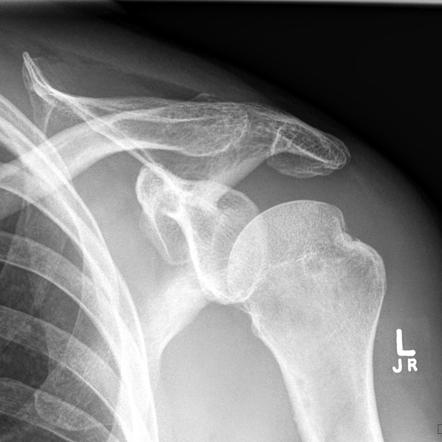
Symptoms
Symptoms of a Hill sachs dislocation include:
Severe pain
Difficulty moving the joint
Visible deformation of the shoulder sometimes with a bulge in the front of the joint
Swelling or inflammation
Nausea and Weakness
Causes
The Hill Sachs lesion is typically caused by a shoulder dislocation.
Sudden falls
Sports injuries
Trauma like car accidents
Diagnosis
Your shoulder specialist will diagnose a Hill-Sachs Lesion using one or more of the following methods:
- Physical examination
- X-rays
- Ultrasound
- MRI
Treatment
The bony defect itself does not require treatment, but the associated injuries and continuous symptoms and instability requires treatment. Shoulder dislocations don’t occur isolated, it causes damage to other tissues surrounding the glenohumeral joint like the ligaments, tendons and the joint capsule.
Treatment depends on the extent of injury, the size of the lesion, its placement etc. Small injuries, where less than 20% of humeral head is involved, can be left alone with some physiotherapy.
Larger lesions which involves 20-40% of the humeral head and is contributing to instability require arthroscopic surgery. Such lesions generally damage other tissues like labrum, rotator cuff, anterior capsule etc. Surgery is very successful in preventing repeat dislocations and restoring motion.
The biggest concern post a Hill Sachs injury is the redislocation rate. More redislocations occur in teenagers than in older people as teenagers have higher percentage of loose tissue.
Treatment options include:
Capsular Shift- is done to tighten up the soft tissues
Remplissage – is primarily a tissue filling process
Disimpaction – this is a relatively new procedure which is still being explored
Shoulder Replacement or Shoulder Resurfacing – some cases of Hill sachs lesion can only be treated with a Shoulder Replacement or Shoulder Resurfacing
For enquiries and online appointments, send message to www.BangaloreShoulderInstitute.com/contact
Q&As on Hill Sachs Lesion
- How does a Hill Sachs lesion occur?
- A Hill Sachs lesion, also called a Hill Sachs impaction fracture, occurs when the back of the head of the humerus (the bone in the upper arm) is injured. This injury happens when the head of the humerus pops out of the glenoid cavity (socket) of the shoulder joint. It scraps against the edge of the socket when it pops out.
- So, there is an injury to both the backside of the head of the humerus and the edge of the glenoid socket.
- Hill Sachs lesion occurs when the shoulder joint gets dislocated. Shoulder joint dislocation can be downward, forward, or backward. Hill Sachs lesion only happens in a forward dislocation of the shoulder, which is the most common shoulder dislocation.
- Shoulder dislocations happen due to specific and frequent, repetitive actions of the shoulder joints like throwing or lifting heavy weights above the shoulder.
- Trauma like road traffic accidents, falls, etc., also cause shoulder dislocations.
- What are the symptoms of the Hill Sachs lesion?
- A shoulder dislocation is an emergency and requires urgent care. Mostly, more than one part of the affected shoulder may be injured in a shoulder dislocation.
- Severe pain localized to the shoulder is the most common symptom of a Hill Sachs impaction fracture.
- There is difficulty in shoulder movements, weakness, and some swelling and bruising of the shoulder.
- There is visible deformation in the shape of the shoulder with a bulge in the front of the joint. There may be muscle spasms of the shoulder muscles.
- How is a Hill Sachs fracture treated?
- Treatment for a Hill Sachs fracture depends on the size of the lesion, its placement, arm mobility, and the extent of the involvement of the glenoid cavity bone.
- In cases of small lesions with less than 20% involvement of the head of the humerus, only physical therapy and rest are advised by the doctor.
- In medium-sized lesions, where the involvement of the head of the humerus is 20% to 40%, the doctor first assesses the stability of the affected shoulder.
- If the shoulder is unstable in such lesions, surgery is advised. Various surgical options are available, like bone augmentation, disimpaction surgery, or Remplissage.
- In cases where there is a large lesion, affecting more than 40% of the head of the humerus, resurfacing is advised. This involves a metal implant or a complete replacement of the humeral head. It is not advised in younger individuals.
- Who is at risk of having a Hill Sachs lesion?
- Everyone is at risk of having an injury that leads to a Hill Sachs lesion. Most people who play sports like baseball, cricket, basketball, golf, lacrosse, swimming, weight lifting, etc. are at a greater risk of having a Hill Sachs lesion
- People who have had previous shoulder dislocations with Hill Sachs are at a higher risk of having it again. It has a high chance of recurrence.
- How common is Hill Sachs lesion?
- In individuals with an anterior or forward shoulder dislocation, a Hill Sachs lesion is reported in 40% to 90% of the patients. It may be as high as 100% in recurrent forward shoulder dislocation cases.
Dislocation of the shoulder joint is the most common joint dislocation amongst the major joints of the body.
6. What is a Hill-Sachs lesion, and why is it clinically significant?
A Hill Sachs lesion is a compression defect on the posterior outer surface of the humeral head that happens when the shoulder dislocates anteriorly. During dislocation, the ball of the shoulder strikes the front edge of the socket. That impact leaves a cortical indentation in the bone.
The lesion itself is usually not painful once the initial injury has settled. Its importance lies in its mechanical effect on shoulder stability. If the defect is large or positioned so that it contacts the glenoid rim during arm elevation and rotation, it can act as a lever point, increasing the likelihood of further dislocation.
Modern assessment does not rely solely on size. The interaction between humeral and glenoid bone loss determines whether the lesion is “engaging” during movement. This relationship influences recurrence risk and treatment planning.
A Hill Sachs lesion, therefore, represents a marker of previous instability and, in some cases, a contributor to ongoing instability. Management decisions are based on instability patterns, bone loss on both sides of the joint, age, activity level and functional demand rather than imaging findings alone.
7. How does a Hill-Sachs lesion contribute to recurrent shoulder instability?
Recurrent instability occurs when the indentation on the humeral head aligns with the anterior rim of the socket during specific arm positions, most commonly abduction combined with external rotation. If the defect engages the glenoid rim, it creates a mechanical locking effect that facilitates redislocation. This is particularly relevant in patients who have associated anterior labral injury or glenoid bone loss.
Instability is therefore rarely caused by the humeral defect in isolation. It is usually part of a combined injury pattern involving capsulolabral structures and, in some cases, socket bone loss. The combined geometry determines risk.
Younger patients, contact athletes, and individuals with high external rotation demands are more likely to experience symptomatic engagement. In contrast, smaller defects that remain within the glenoid track do not typically destabilise the joint. Understanding this interaction is central to selecting appropriate treatment, whether non-operative rehabilitation, soft-tissue repair, or bone-augmentation procedures.
8. How is the size and functional impact of a Hill Sachs lesion accurately evaluated?
Accurate evaluation requires both imaging and clinical correlation. Standard radiographs may demonstrate the defect, but three-dimensional CT scanning provides precise measurement of humeral head bone loss. MRI allows assessment of associated soft tissue injuries, including labral tears and capsular damage. Contemporary evaluation incorporates the concept of the glenoid track. This assesses whether the humeral defect will engage the socket during functional movement. A lesion outside the track carries a higher instability risk.
Clinical examination remains essential. Recurrent dislocation, positive apprehension testing and instability during overhead positioning support the diagnosis of functional engagement.
Imaging findings alone do not determine treatment. The decision depends on combined bone loss, instability frequency, patient age, occupational demand and sporting activity. This structured assessment allows risk stratification rather than reflex surgical recommendation.
9. Can a Hill-Sachs lesion heal without surgical intervention?
The bony indentation does not remodel to its original contour in skeletally mature patients. However, functional stability may be restored without surgery if the defect does not engage and soft tissue healing is adequate. Non-operative management focuses on strengthening the rotator cuff and scapular stabilisers. Improved muscular control maintains the humeral head’s central position and reduces the risk of engagement.
First-time dislocations with small defects and minimal socket bone loss often respond well to structured rehabilitation. Recurrence risk remains higher in younger patients.
The objective is not radiological healing but biomechanical stability. Regular reassessment ensures that instability does not persist unnoticed.
10. When is surgical treatment considered for a Hill-Sachs lesion?
Surgery is considered when recurrent instability persists despite appropriate rehabilitation, or when imaging demonstrates an engaging lesion combined with significant glenoid bone loss.
The surgical strategy depends on the combined bone defects. Soft-tissue stabilisation alone may suffice for small, non-engaging lesions. Engaging defects may require additional procedures to prevent contact with the socket rim.
The aim of surgery is to restore joint stability and prevent progressive bone loss. Decisions are individualised, balancing recurrence risk against surgical risk. Young contact athletes and patients with repeated dislocations are more likely to benefit from operative stabilisation.
11. What are the long-term implications if a significant Hill-Sachs lesion is not addressed?
Persistent instability can lead to progressive enlargement of both humeral and glenoid bone defects. Repeated dislocations accelerate cartilage wear and increase the risk of early degenerative joint disease. Chronic instability may also impair shoulder strength and confidence, limiting occupational and sporting performance. Early appropriate management reduces cumulative joint damage. The objective is the preservation of long-term shoulder function rather than merely treating acute dislocations.
12. Is a Hill Sachs lesion painful by itself?
After the initial dislocation settles, the lesion itself usually does not cause direct pain. Symptoms arise from instability rather than solely from the bone defect. Discomfort typically reflects associated soft tissue injury or recurrent subluxation episodes rather than the indentation fracture itself.
13. Does every Hill Sachs lesion require surgery?
No. Small non-engaging lesions without recurrent instability are often managed successfully with structured rehabilitation. Surgical intervention is generally considered only when there is persistent instability, significant bone loss, or failure of conservative treatment.
14. Can patients return to sport after treatment for a Hill-Sachs lesion?
Yes. Return to sport is possible once stability, strength and range of motion are restored. Timing depends on severity and treatment type. A graduated, sport-specific rehabilitation programme is essential to minimise the risk of recurrence and ensure safe performance at the pre-injury level.