
Parsonage Turner Syndrome
A normal healthy individual can get affected with Parsonage Turner Syndrome with sudden, rather abrupt, unilateral shoulder pain that may begin gradually, but quickly amplifies its strength and severity. The pain is often described as sharp, aching, burning, stabbing or throbbing.
Parsonage-Turner Syndrome (PTS), also referred to as idiopathic brachial plexopathy or brachial neuritis, is a rare neurological disorder which consists of complex constellation of symptoms with sudden onset of shoulder and arm pain, usually involving only one side, followed by progressive neurologic deficits of motor weakness, dysesthesias and numbness. The exact cause of the disease is still unknown. However, it is reported in various clinical settings including some sort of antecedent impact on the patient, it can be surgical, infectious, traumatic or even therapeutic, such as cases involving vaccinations or antibiotic treatments.
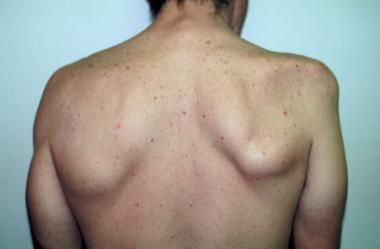
A normal healthy individual can get affected with this disorder with sudden, rather abrupt, unilateral shoulder pain that may begin gradually, but quickly amplifies its strength and severity. The pain is often described as sharp, aching, burning, stabbing or throbbing. In some cases, the pain may extend to the neck, lower arm and/or hand on the affected side. People affected with the syndrome can experience constant pain that gets worse with movement. Acute pain can last from a few hours to several weeks, at which point the intensity starts to subside. However, mild pain may linger for a prolonged time. As the pain ameliorates, it generally is replaced with progressive weakness of the affected area, ranging from mild weakness to complete paralysis. Weakness may be accompanied by muscle wasting (atrophy), absent or reduced reflexes or sensory abnormalities that typically involve the shoulder girdle musculature and proximal upper limb muscles.
In rare cases, nerves and muscles outside of the shoulder and upper arm region are affected such as causing leg symptoms or affecting the diaphragm.
Early diagnosis of the condition can help avoid unnecessary and potentially harmful diagnostic and therapeutic interventions and avoid delays in prescribing appropriate therapies that may be helpful only early in the course of the disease. In majority of cases no triggering or underlying cause can be identified. Factors that are suspected to trigger the condition include:
- Infections (both viral and bacterial)
- Surgery
- Vaccinations
- Childbirth
- Certain medical procedures, such as a spinal tap or imaging studies that require administration of radiologic dye
- Strenuous exercise
- Certain medical conditions, including connective tissue disorders and autoimmune disorders
- Injury
There are two main types of Parsonage-Turner syndrome, idiopathic and inherited. The most common type is idiopathic, which may arise as a result of your autoimmune response, which means body system attacking your nerves. It can happen following exposure to an illness or environmental factor. Researchers believe Parsonage-Turner syndrome can be a multifactorial condition (a combination of environmental and genetic factors). A person may have a genetic predisposition to Parsonage-Turner syndrome, but won’t develop the condition till they are exposed to such environmental triggers.
Symptoms:
The primary symptom of this disease is pain which may give way to muscle weakness over the course of the time. The severity and length of these phases vary from person to person. The symptoms may include:
- sudden, intense shoulder pain that is often described as stabbing or burning, usually in the right shoulder, but in some rare cases, in both shoulders
- pain that becomes worse if you move your shoulder
- pain that is only relieved by the strongest painkillers and remains constant for a number of hours or even weeks
- weakness or paralysis in the shoulder muscles as the pain goes away
- muscle atrophy, which is decrease in muscle mass
- areas of numbness that occasionally develop in your arm or shoulder
- shortness of breath, which occurs if the nerve to your diaphragm is affected
Treatment:
Usually Parsonage-Turner syndrome is treated with medications and physical therapy. However, rarely, your doctor may suggest a surgery.
Medication and exercise: Initial treatment starts with painkillers. Once the pain is under control, the focus shifts to helping you regain normal functions of arm and shoulder. To strengthen your muscles, you may need to follow a set of active and passive exercises. The service of a physical therapist can be sought.
Surgery: Surgery is reflected upon only if your symptoms do not show any signs of improvement even after a period of about two years. Surgery is aimed to restore muscle function. Tendon transfers can also be considered.
Long-term outlook:
After a period of time, pain associated with Parsonage-Turner syndrome will settle. However, it may take a few months for the muscle weakness to resolve. The general rule is that, the longer the pain lasts, the longer your overall recovery will take. In some people, muscle weakness can last for years and a few are left with permanent loss of strength, albeit mild.
Parsonage-Turner syndrome: An uncommon cause of shoulder pain
Patients with Parsonage-Turner syndrome are often misdiagnosed as having cervical radiculopathy. In case of this disorder, patients may exhibit severe shoulder and upper arm pain followed by marked upper arm weakness. With the help of magnetic resonance imaging, it can be found out if there is any degeneration in the shoulder and upper arm musculature, allowing prompt diagnosis. Electromyography, done three to four weeks after the symptom onset, can identify the disease and help affirm the diagnosis. First-line treatment includes analgesics and physical therapy, with symptoms subsiding usually in three to four months. It is important to avoid misdiagnosis in a patient with Parsonage-Turner syndrome.
For enquiries related to Parsonage Turner Syndrome or any other shoulder problems, send a message to www.BangaloreShoulderInstitute.com/contact
Q&As on Parsonage Turner Syndrome
1. What is brachial plexus?
The brachial plexus is a network of nerves in our body that starts from the spinal cord and extends to the side of the neck behind the collar bone to the arm. These nerves are supposed to control the movement of the shoulder, arms, forearm, elbow, and wrist. These nerves also carry sensation from your arms to the spinal cord which means you recognize the hot or cold of an object you have grabbed. There are three trunks, the upper, middle, and the lower, in the neck and the nerves are formed in these trunks.
2. What are the stages of Parsonage-Turner syndrome?
There are two stages of Parsonage-Turner syndrome. The first one is the acute stage and here severe, throbbing pain is felt. The pain is sudden in one or both the shoulders and it affects the respective arm and side of the neck. Pain increases rapidly in the acute stage. This stage lasts from a few hours to a few weeks. The second stage is the chronic stage where the pain is moderate. Pain may disappear completely or may become lesser in intensity. Still, activities like lifting, bending, and those activities that use the shoulder cause pain.
3. What happens after the chronic stage?
The recovery stage is the next to the chronic stage. During this stage, secondary complications may set in. It is called subluxation which is the dislocation of the shoulder joint. Due to this, shoulder mobility may be lost. Certain tendons of the shoulder may move away and severe pain and inflammation may also be caused. This condition is referred to as adhesive capsulitis. Circulatory issues also emerge post the chronic stage. There may be discoloration of the skin of the hands and poor temperature response in the arms and hands.
4. What causes Parsonage-Turner Syndrome?
The exact cause is still unknown but there are several doctrines to this syndrome.
- It has come to the notice of experts that many people report a viral infection before the symptoms of Parsonage syndrome started to appear.
- Any accident that causes trauma and injury to the shoulders may be another reason.
- A faulty immune system may also cause the Parsonage syndrome.
- A lumbar puncture may cause this syndrome.
- The use of heroin may trigger symptoms related to this syndrome.
- Any parasitic infection may also result in Parsonage syndrome.
- Autoimmune disorders may also be another cause.
5. Who is most affected by Parsonage turner syndrome?
For every 1 lakh individual in a sample population, approximately 1.64 to 3.00 people are affected by PTS. It affects males more often than females. Since the exact causes are not determined, the correct frequency of occurrence of the syndrome in the general population cannot be ascertained. Young and middle-aged adults are those that report symptoms related to PTS. However, the causes of PTS may not be recognized in these adults too. In some cases, it has been reported in young children and the elderly population too.
6. Why does Parsonage Turner Syndrome cause sudden shoulder pain?
Parsonage-Turner syndrome affects the nerves that supply the shoulder and arm. When these nerves become inflamed, the pain can start suddenly and feel much stronger than a usual muscle strain. Patients often describe a deep, sharp or burning pain around the shoulder, upper arm or neck.
The pain may be severe at first, then weakness can become more noticeable as the pain begins to settle. This pattern is one reason the condition can be confusing in the early stage.
7. Is Parsonage Turner Syndrome a shoulder joint problem or a nerve problem?
It is mainly a nerve problem, not a primary shoulder joint injury. The shoulder may feel painful and weak, but the underlying issue usually involves inflammation of the brachial plexus or nearby nerves.
This is why some patients have a normal shoulder X-ray but still struggle to lift the arm. A careful examination is important because rotator cuff tears, frozen shoulder, neck nerve compression and Parsonage Turner Syndrome can sometimes produce similar symptoms.
8. Can Parsonage Turner Syndrome be mistaken for a rotator cuff tear?
Yes, it can. Both conditions can cause pain and difficulty lifting the arm. The difference is that Parsonage Turner Syndrome often begins with unusually intense pain, followed by weakness due to nerve involvement.
A rotator cuff tear usually causes weakness because the tendon is damaged. In Parsonage Turner Syndrome, the tendon may be intact, but the nerve signal to the muscle is affected. Clinical examination, MRI and nerve tests may be needed to tell the difference.
9. When should I see a specialist for possible Parsonage Turner Syndrome?
You should seek medical advice if you develop sudden severe shoulder or upper arm pain, especially if weakness follows over the next few days or weeks. This is more important if you cannot lift the arm, notice muscle wasting, or have numbness, tingling or shortness of breath.
Early assessment helps rule out other causes such as neck disc problems, tendon tears, infection or joint disease. It also helps you start the right pain control and rehabilitation plan at the correct time.
10. What tests are used to diagnose Parsonage Turner Syndrome?
Diagnosis usually begins with a detailed history and physical examination. Your doctor will look at the pattern of pain, weakness, sensation and reflex changes.
MRI may be used to assess the shoulder, neck or muscles, depending on the symptoms. Nerve conduction studies and electromyography, often called EMG, can help confirm nerve involvement. These tests may be more useful a few weeks after symptoms begin, because nerve changes can take time to show clearly.
11. Does Parsonage Turner Syndrome always affect only one shoulder?
Most cases affect one side, but both shoulders can be involved in some patients. Symptoms can also extend beyond the shoulder into the upper arm, forearm or hand, depending on which nerves are affected.
The pattern is not the same for everyone. Some patients mainly notice shoulder weakness, while others have more arm pain, numbness or reduced control of certain movements. This variation is another reason why a specialist assessment is useful.
12. Can physiotherapy help in Parsonage Turner Syndrome?
Yes, physiotherapy can help, but the timing and type of exercise matter. In the early painful stage, treatment usually focuses on comfort, gentle movement and preventing stiffness.
Once pain settles, rehabilitation aims to maintain shoulder mobility and rebuild strength as the nerves recover. Exercises should be carefully chosen because forcing weak muscles too early can increase pain or cause poor movement habits. A guided programme is safer than doing random shoulder exercises online.
13. How long does recovery from Parsonage Turner Syndrome take?
Recovery can be slow because nerves heal gradually. Pain may improve within weeks or months, but strength can take much longer to return. Some patients recover well, while others are left with mild weakness or fatigue in the affected shoulder.
Progress depends on which nerves are involved, how severe the weakness is and how early the condition is recognised. Regular follow-up helps monitor muscle recovery and adjust rehabilitation at the right pace.
14. Can Parsonage Turner Syndrome come back?
It can recur, although this does not happen to everyone. Some patients have only one episode, while others may experience another attack later in life.
You should seek review if a similar sudden pain returns, especially if it is followed by weakness or altered sensation. Recurrent symptoms may need further investigation to check for an inherited tendency, immune-related triggers or another condition affecting the nerves.
15. What should I avoid if I have Parsonage Turner Syndrome?
Avoid heavy lifting, repetitive overhead work and forceful shoulder exercises while the arm is weak. The shoulder muscles may not be receiving normal nerve signals, so pushing through weakness can strain other tissues and worsen movement control.
It is also important not to ignore pain that feels different from a usual shoulder strain. Rest alone is not enough for every patient. Pain control, protected movement and supervised rehabilitation usually give the shoulder the best chance of recovering safely.
16. Can Parsonage Turner Syndrome affect sleep?
Yes. The early pain can be intense enough to disturb sleep, especially when lying on the affected side. Some patients find it more comfortable to sleep on their back with the arm supported by a pillow.
If sleep is poor because of pain, speak to your doctor. Better pain control can make daily movement easier and may help you take part in rehabilitation when the shoulder is ready.
17. Is surgery needed for Parsonage Turner Syndrome?
Most patients do not need surgery. Treatment usually involves pain relief, monitoring nerve recovery and physiotherapy. Surgery may be discussed only in selected cases where there is no useful recovery after a long period, or where a specific nerve or muscle problem may benefit from specialist reconstruction.
The decision is never based on pain alone. It depends on strength, function, test results, the duration of symptoms, and the extent of recovery over time.