

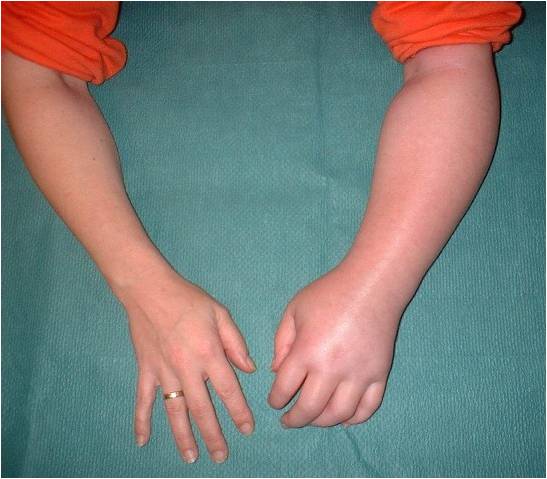
Shoulder-Hand syndrome is a relatively common occurrence after stroke. Usually, the person has a stroke that leaves them paralyzed on one side. Recovery of the paralysis is subjective, varies between patients. Often the lower extremities recover quicker than the upper ones. For reasons unknown, some people are left with significant weakness in the hands that can be quite painful. When the pain is quite severe in the hand and the shoulder on the paralyzed side the condition is called shoulder-hand syndrome.
Symptoms:
• Shoulder Pain
• Hand Pain
• Numbness
• Elbow Pain
• Wrist Pain
• Tingling
• Burning
• Stiffness
• Swelling
• Discoloration of the hand
Description:
There are two types of shoulder-hand syndrome.
- Type 1 occurs post an injury or illness that did not directly damage a nerve in the affected area
- Type 2 happens after a distinct nerve injury
Though the triggers may vary, both types of shoulder-hand syndrome have the same symptoms and go through the same three stages of disease, which are:
Stage I: Acute
This stage may last upto three months and begins with rapid onset of widespread swelling, joint stiffness and tenderness at the top of the hands. The affected person can feel a burning pain and sensitivity to touch. Hand can become pale due to narrowing of the blood vessels in the hand. On moving the hand, substantial pain in the shoulder and hand can be felt. The pain is more constant and longer lasting. There can be increased warmth and redness in the hand. There may be faster-than-normal nail and hair growth and excessive sweating. Patchy areas of bone loss can be seen on x-rays of the hands.
Stage II: Dystrophic
This stage can last upto 3 to 12 months. Swelling is more constant and skin wrinkles disappear. Skin temperature cools off. Fingernails can become brittle and the pain is broad-based. Stiffness increases and the affected area becomes extremely sensitive to touch.
Stage 3: Atrophic
This stage occurs after one year. It is characterized by absence of swelling, tenderness and pain, but hand movements are limited because the fingers may be stiff or clawlike, resembling Dupuytren’s contractures. A significant loss in the density of the bones can be seen on x-rays taken at this stage.
Causes:
Injuries such as falling on the hand, breaking the wrist bone, heart attack, stroke, and possibly use of certain drugs (such as barbiturates) can lead to this condition. However, the precise way that shoulder-hand syndrome develops is unknown. One theory is that a “short circuit” in the nervous system is responsible. This “short circuit” causes overactivity of the sympathetic (unconscious) nervous system which affects blood flow and sweat glands in the affected area.
Symptoms generally appear after injury or surgery. Other causes include pressure on a nerve, infection, cancer, neck problems, stroke, or heart attack. Some people seem to be genetically predisposed to develop this disorder than others.
Doctor examination:
After discussing your past medical history and symptoms, the doctor will do a close examination of the affected hand. People with shoulder-hand syndrome are unusually protective of the involved limb. Even a light touch may evoke expressions of severe pain.
Tests:
There is no single test that can make the diagnosis of shoulder-hand syndrome. Some imaging studies, such as x-rays, bone scans, and magnetic resonance imaging (MRI) scans can help your doctor to arrive at a firm diagnosis.
Treatment:
For a meaningful recovery of this condition, treatment should be started as early as possible. This may prevent the disease worsening further. Treatment usually includes a combination of therapies such as:
Non-surgical treatments:
Medications: Non-steroidal anti-inflammatory drugs (NSAIDs), oral corticosteroids, anti-depressants, blood pressure medications, anti-convulsants and opioid analgesics are medications recommended to relieve symptoms.
Injection therapy: Injecting an anesthetic near the affected sympathetic nerves can reduce symptoms. This is usually recommended early in the course of shoulder-hand syndrome in order to arrest further progression to the later stages.
Biofeedback: Increased body awareness and relaxation techniques may help with pain relief.
Therapy: Active exercise that stresses on normal use of the affected limb is indispensable for permanent relief of this condition. Physical and/or occupational therapy are important in helping patients regain normal use of the affected hand. Medications and other treatment modalities can bring down the intensity of the pain, thus allowing the patient to engage in active exercise.
Surgical treatments:
If non-surgical treatments do not bring the desired result, there are surgical procedures that may help to deal with the syndrome in a better way.
Spinal cord stimulator: Tiny electrodes are implanted along your spine and deliver mild electric impulses to the affected nerves.
Pain pump implantation: A small device that delivers pain medication to the spinal cord is implanted near the abdomen.
Psychological evaluation and counseling is another significant treatment modality for shoulder-hand syndrome.
For questions related to Shoulder Hand Syndrome, send a message to www.BangaloreShoulderInstitute.com/contact
Q and As – Shoulder Hand Syndrome
1.What is the shoulder hand syndrome?
The term shoulder hand syndrome is used to describe painful disabilities of the upper limb due to disturbances of the sympathetic nerve supply to the affected limb. The various symptoms experienced due to shoulder hand syndrome are a result of reflex stimulation of the sympathetic nervous system. Any or all such disabilities have a common or similar underlying mechanism that involves the blood vessels and nerves.
2. What causes shoulder hand syndrome?
The shoulder hand syndrome is most commonly seen in association with conditions like a heart attack (or myocardial infarction), some kind of trauma, and stroke (or hemiplegia). Infrequently, it has also been observed after a herpes zoster infection, gonococcal arthritis, diffuse vasculitis, cervical osteoarthritis, and thrombophlebitis.
It is caused due to any disturbance or trauma to the tissue which affects the sympathetic nervous system, associated with the spinal cord, which provides the nerve supply to the upper limb and the shoulder. The elbow is rarely involved in shoulder hand syndrome.
3. What are the ways in which shoulder hand syndrome can be prevented after a stroke?
After a patient has suffered a cardiac or cerebral stroke, it is likely for them to develop shoulder hand syndrome. There are protocols in place that are used to prevent shoulder hand syndrome from developing in patients who are in the early stages of their recovery from a stroke. These mainly involve different types of passive shoulder and hand movements that can be performed by the patient alone or with the help of a physical therapist. Active movements can also be done by the patient if it is not painful. It helps reduce hand edema and stiffness.
4. What are the symptoms associated with shoulder hand syndrome?
The shoulder hand syndrome is also called Steinbrocker syndrome. The symptoms seen with shoulder hand syndrome, which may last from weeks to years, are:
- Painful shoulder with a disability to move and limited range of motion.
- Swelling and color changes in the overlying skin.
- Pain and stiffness of the hand and fingers.
- Change in color may vary from deep red to cyanotic blue or pale.
- In the early stage, the hand is warm due to elevated temperature.
- Loss of fat from the affected limb.
- Osteoporosis of the bones of the hands, tendon tightness and pain, deformities of the fingers.
The symptoms seen in a particular case of shoulder hand syndrome can range from a mild form to prolonged progressive syndrome.
5.How is shoulder hand syndrome treated?
The shoulder hand syndrome is diagnosed based on clinical presentation. Three-phase bone scintigraphy is believed to be the most useful additional diagnostic test.
The treatment for shoulder-hand syndrome initially consists of conservative treatment options like physical therapy. Another option is the administration of corticosteroids. One should consider the role of proper physical therapy in improving the results of other treatments as well as in preventing the syndrome. Many stroke patients may have contraindications to corticosteroid therapy, hence other methods of effective treatment are crucial.
6. Why does my hand become painfully sensitive even with light contact?
This heightened sensitivity develops because the pain pathways become overactive. Signals that would normally be interpreted as harmless are amplified, so even light contact feels uncomfortable. Patients often notice difficulty tolerating clothing, touch, or routine handling of objects.
This is not a problem in the skin itself. It reflects a change in how the nervous system processes sensation. The brain begins to assign a higher threat value to ordinary input. Over time, carefully graded exposure to touch helps retrain this response. The aim is to reduce sensitivity gradually rather than avoid contact completely, as avoidance tends to reinforce the cycle.
7. What explains the sudden changes in temperature and colour in my hand?
The control of blood flow becomes inconsistent due to altered nerve signalling. Small vessels may widen or narrow unpredictably, leading to visible changes in colour and temperature. At times, the hand may appear red and warm, while at other moments it may feel cold or look pale.
These fluctuations can occur without a clear trigger and may change throughout the day.
Patients often find this unsettling, particularly when the affected hand looks very different from the other side. Despite this, the underlying issue is not damage to the vessels themselves but a disturbance in regulation. As the condition improves, these variations tend to settle.
8. Why does grip feel unreliable even when I try to use my hand normally?
The difficulty usually arises from a combination of swelling, discomfort, and reduced coordination. The muscles themselves may be intact, but they are not working in a well-synchronised way. Pain limits how confidently you use your grip, and the nervous system often reduces effort as a protective response.
This can create a sense of hesitation or reduced precision when handling objects. Simple actions such as fastening buttons or holding a utensil may feel less controlled than usual. Continuing gentle, regular use of the hand helps maintain coordination and prevents further loss of strength. With consistent use, control typically improves as the nervous system settles.
9. Why are my fingers more stiff after waking up?
Stiffness tends to increase during periods of inactivity. Overnight, the joints remain relatively still, and fluid accumulates within the tissues. It creates a feeling of tightness and reduced flexibility on waking.
Once movement begins, circulation improves, and the stiffness gradually eases. Many patients notice that even a few minutes of gentle motion makes a clear difference. Starting the day with simple finger and wrist exercises helps restore mobility and prepares the hand for daily use.
10. Can stress influence how severe the symptoms feel?
It can have a noticeable effect. The systems that regulate pain and circulation are closely linked with the body’s stress response. When these systems are already sensitised, as in this condition, additional stress can amplify symptoms.
Patients may notice increased discomfort, more pronounced colour changes, or a rise in stiffness during periods of fatigue or emotional strain. It does not mean the condition is psychological. It reflects how the nervous system behaves under pressure. Managing stress can therefore support physical recovery by reducing this amplification effect.
11. Why is gentle movement advised instead of complete rest?
Complete rest may seem protective, but it often leads to worsening stiffness and reduced function. When the hand and shoulder are not used, the joints become less mobile, and the nervous system becomes more sensitive to movement.
Gentle, controlled activity helps maintain flexibility and provides consistent input to the brain that the limb is safe to use. It reduces the tendency toward overprotection. The aim is not to push through severe pain, but to keep the limb active within a comfortable range. This approach supports recovery without aggravating symptoms.
12. Can the swelling become difficult to reverse if ignored?
Persistent swelling can lead to longer-term changes in the tissues. Over time, the skin and underlying structures may become tighter, and joint movement can become more restricted. It makes recovery more challenging if the condition is not addressed early.
Timely management helps prevent these changes. Elevation, regular movement, and guided therapy all play a role in controlling swelling. When these measures are introduced early, the likelihood of lasting stiffness or limitation is significantly reduced.
13. Why does the skin appear shiny or feel different compared to the other hand?
Changes in skin texture occur due to altered circulation and reduced use of the limb. The skin may appear smoother, slightly glossy, or thinner than usual, and nails may grow more slowly or become brittle. These changes reflect a shift in how the tissues are being nourished and maintained rather than any permanent damage. As movement improves and circulation stabilises, the skin and nail quality gradually begin to recover. In most cases, these visible differences fade over time as normal function returns.
14. Should I continue using the hand for everyday activities?
Yes, continued use is important, but it should be balanced. Light, purposeful activity helps maintain mobility and prevents further stiffness. Tasks such as writing, holding objects, or gentle household work can support recovery when performed within a comfortable range.
It is important to avoid forceful or repetitive strain that significantly increases pain. The goal is steady, controlled use rather than complete rest or overuse. This balanced approach helps restore function while protecting the affected structures.
15. How can I recognise that recovery is progressing?
Improvement tends to be gradual and may not be immediately obvious. Early signs include reduced sensitivity to touch, less swelling, and improved tolerance to movement. Colour changes become less frequent, and the hand begins to feel more predictable.
Function usually improves step by step. Tasks that were previously difficult become easier, and confidence in using the hand returns. These changes indicate that the nervous system is stabilising and that recovery is moving in the right direction.
More reading
 Link Between Diet and Arthritis
Arthritis, a condition marked by joint pain and stiffness, affects millions worldwide. While factors such as…
Read More
Link Between Diet and Arthritis
Arthritis, a condition marked by joint pain and stiffness, affects millions worldwide. While factors such as…
Read More
 Factors That Cause Shoulder Pain in Women
Shoulder pain is a widespread issue for many women, presenting as anything from a mild ache…
Read More
Factors That Cause Shoulder Pain in Women
Shoulder pain is a widespread issue for many women, presenting as anything from a mild ache…
Read More
 Common Types of Shoulder Pain and How to Identify Them
Shoulder pain affects many people regardless of age or lifestyle. The shoulder joint is highly mobile,…
Read More
Common Types of Shoulder Pain and How to Identify Them
Shoulder pain affects many people regardless of age or lifestyle. The shoulder joint is highly mobile,…
Read More
 Tips to Prevent a Gym Shoulder Injury
No matter if you're new to weight training or a seasoned gym-goer, shoulder injuries can quickly…
Read More
Tips to Prevent a Gym Shoulder Injury
No matter if you're new to weight training or a seasoned gym-goer, shoulder injuries can quickly…
Read More